The Weather-Sign Trap: When a Red Sky Tells Too Little
Red sky weather sayings offer a clue, not a forecast. Learn what sunset color can suggest, what it leaves out, and when to check local conditions before acting.
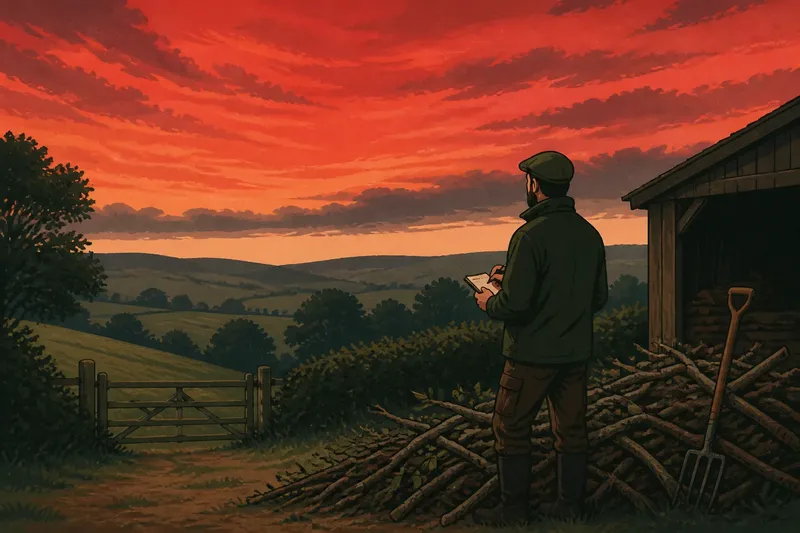
What does a red sky actually tell you about tomorrow’s weather? Red sky weather sayings point to a visible condition, but the meaning depends on where you are, which way weather is moving, and what else the sky is doing.
At a field edge, a red sunset may be worth noticing before you leave tools outside overnight. It is not enough, by itself, to decide whether rain is coming. The saying joins an observation to a prediction; those are separate things, and the sky has not agreed to the forecast.
Red sky weather sayings depend on location and weather flow
Red or orange light near sunset comes from sunlight traveling through a long stretch of atmosphere. Cloud, haze, dust, and moisture can change how that light looks. The color describes the scene, not the cause of every cloud or the direction of the next weather system.
The traditional saying is most plausible where weather systems often approach from the west and the sky’s appearance gives a useful view of conditions in that direction. A red sunset may coincide with clearer air to the west, which could move toward an observer. In other regions, or under a different weather pattern, that reasoning may not apply. Even where it does, local hills, coastlines, and showers can complicate the picture.
A red morning sky can also appear with cloud or moisture in the west, but color alone cannot tell you whether that weather will reach your location. The saying compresses a possible pattern into a tidy forecast. Tidy is not the same as dependable.
Color is only one part of the scene
Notice what surrounds the red horizon before deciding what it might mean. A bright band under a clear sky is different from a red glow beneath thickening cloud, though neither settles the forecast. Wind, cloud movement, and the shape of the land add context without removing uncertainty.
For a useful field observation, describe the view in plain terms:
- Cloud: If the western sky is clear beyond the red horizon, then clearer air may be present in that direction; if cloud is thickening, look for its movement and check a local forecast.
- Cloud movement: If you can see cloud advancing steadily, then note its direction and watch for change; if its movement is hard to judge, do not infer a weather path from a single glance.
- Wind: If the wind is steady and consistent with visible cloud movement, then record both as supporting clues; if it shifts or becomes gusty, reassess rather than relying on the sunset.
- Visibility: If distant hedges or hills look hazy, then include that in your description; if they remain sharp, do not treat clear visibility as proof of settled weather.
- Setting: If you are in a sheltered valley, then allow for conditions that differ from an exposed ridge; if your view is limited, check a forecast for the place where the decision matters.
- Timing: If the sky is changing while you watch, then check again before acting; if it stays similar, keep the forecast uncertain rather than turning color into a promise.
These checks are useful because they make the decision explicit. They do not add up to a home-built forecast with hidden authority.
Keep observations and predictions separate
Write one sentence for what you can see and another for what you think may follow. “The western horizon is red, with a low band of cloud above the ridge” is an observation. “The cloud may move closer, so I’ll check again before leaving the field” is a cautious inference.
That separation makes it easier to revise your judgment. If the wind shifts or cloud thickens, you have new information; you do not need to defend an earlier guess. A brief note can include the time, your location, wind direction, and visible cloud movement. “Looked unsettled” is less useful because it leaves the actual scene to memory.
Say you are preparing to stack cut branches before dusk. The starting conditions are a red western sky, a darker cloud band behind a wooded rise, and loose branches still in the open yard. You note the cloud’s direction, feel the wind, and check a current forecast for your location. If the band advances or the forecast points to rain, you move the branches under cover; if the cloud stays distant and conditions remain calm, you can leave them temporarily but check again before finishing. The decision follows several observations, not the color alone.
Why do red-sky sayings sound more certain than they are?
Does a red sky at night mean fair weather tomorrow?
It can fit a pattern in which clearer air to the west is moving toward you, but that depends on regional weather flow and local conditions. Treat it as a clue rather than a promise of a dry day.
Does a red sky in the morning mean rain is coming?
It may accompany cloud or moisture to the west in some settings. The color cannot tell you whether that weather will reach your location or when conditions might change.
Does cloud movement make a red sky more useful?
It adds context when you can see its direction clearly and keep watching. Cloud movement still describes what is happening, not everything that may happen next.
When should you check a local forecast?
Check one when weather could affect travel, outdoor work, livestock, or access to exposed ground. If conditions are changing quickly, follow current official warnings and act on the situation in front of you.
Use the saying as a prompt to look again
A red sky is most useful when it reminds you to examine the wider scene. Compare cloud movement, wind, visibility, and the setting with a current forecast for the place where you will be. A regional forecast may not describe a sheltered hollow and an open ridge in the same way, so match its location as closely as you can.
Notice, too, when a saying supports the plan you already prefer. A red sunset may seem to endorse leaving equipment out or postponing a task under cover. That is a reason to check the conditions, not a second opinion from the atmosphere.
Keep red sky weather sayings in their proper place: a prompt to observe, followed by a forecast that can be revised. The practical question is not whether the old line wins, but whether the conditions where you will be still support the choice you are about to make.