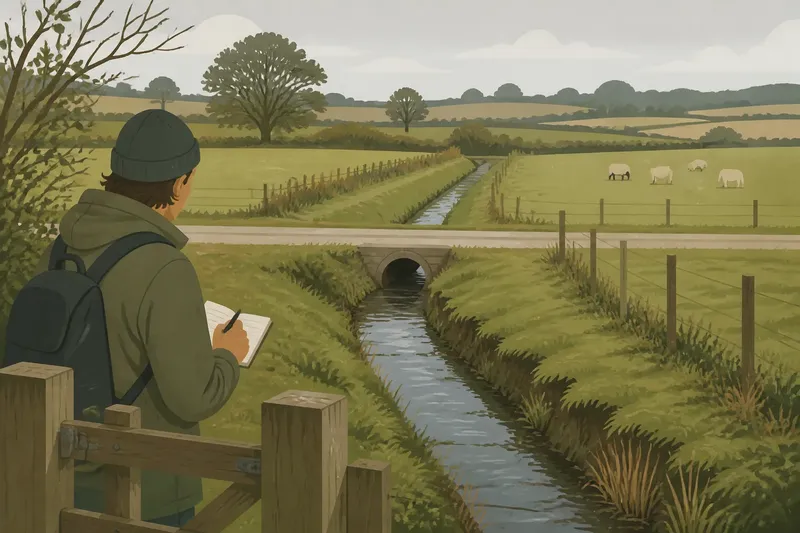
Why Field Boundaries Bend and Break
Why field boundaries bend and break: learn to read slope, access and plot shape so you can interpret an edge without mistaking one clue for the whole story.
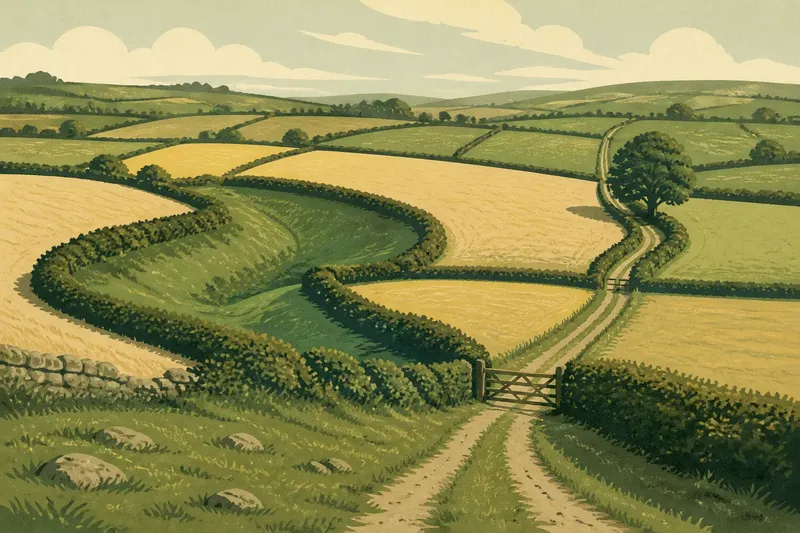
Why do field boundaries bend and break? When a hedge turns around a hollow or stops beside a gateway, the shape may reflect the slope, farm access, or an older plot. To read why field boundaries bend and break, start with what the edge does on the ground; its outline alone rarely tells the whole story.
Read bends against the ground
A straight line on a map can look sensible, but land seldom offers a blank sheet. A hedge may curve around a bank, wet ground, exposed rock, or a steepening slope. What appears to wander may follow a contour that makes cultivation easier or helps limit soil movement downhill.
Look for changes in level beside the bend. Does the slope alter? Is there a shallow hollow, a shelf, or a bank that continues beyond the hedge? If the boundary follows a visible change in the ground, terrain may help explain its route. That is a clue, not a verdict: people can build banks, and slopes can coincide with other kinds of edge.
View the boundary from both ends. A dip that is hard to see from one direction may align with a shallow run of ground from the other. Walking the edge slowly is more useful than explaining it from the gate.
Check whether access explains a break
Boundaries often accommodate movement. A gap may lead to a lane, a gateway may sit at the easiest approach, and a short offset may leave room to turn. An apparent break can also mark a passage between fields or a route used to move animals. Ask what can pass through the opening and where the route leads.
Follow the line beyond the gap. Look for a worn track, paired gateways, a change in vegetation, or a clear route toward a yard, lane, or neighboring plot. A track that ends at rough ground may have served a purpose that is no longer obvious. A visible opening does not establish a public right of way; access rights depend on local records and circumstances.
Say you see a hedge with a short opening beside a lane and a faint track pointing toward an old field entrance. The opening and track together suggest that movement may explain the interruption, while the hedge’s shape alone would not. Record both observations before settling on an interpretation.
Common questions about field boundary shapes?
Why does a boundary cut into a field?
A notch may leave room for a gate, avoid difficult ground, or mark the edge of a smaller working plot. Check whether it aligns with an entrance, a slope change, or a visible difference in soil and vegetation.
What does a hedge that stops suddenly mean?
It may meet a track, ditch, or another boundary, or it may mark a place where fencing once continued. Look for a likely continuation on the other side, but treat a missing section as missing evidence, not proof of a former layout.
Can a straight field edge still follow the land?
Yes. A straight hedge can follow a broad shelf, terrace, or consistent change in slope. Compare the ground along the whole edge rather than assuming a straight line is artificial or a curve is natural.
Compare working plots and neighboring edges
Some edges make more sense as the outline of a working area than as a divider between equal fields. A small corner may have been set aside for access or a different use of the ground. A narrow strip between larger fields may reflect the need to reach an awkward edge with a plow or mower. Differences in vegetation, soil, or surface can support that reading, but none identifies a past use by itself.
Compare neighboring plots. If one boundary jogs while the others run in parallel, ask whether the jog gives access to a corner or avoids a feature that does not extend across the field. If several edges bend in a similar direction, the broader landform may explain more than any single hedge.
Do not treat an untidy outline as evidence of neglect. Each section may answer a different practical constraint. A clean map line is a drawing convention, not a promise that the ground will cooperate.
Record observations before choosing an explanation
When clues point in different directions, use the same order each time. For every observation, note what it supports and what else could account for it.
- Trace the whole edge. If it bends, stops, meets another boundary, or opens onto a route, record each change; if the line is obscured, note the gap in what you can see and avoid inferring its course.
- Read the ground. If a slope, hollow, bank, or change in surface aligns with the edge, consider terrain as an explanation; if it does not, keep access or plot shape in consideration.
- Check movement. If a visible track connects an opening to a lane, yard, or neighboring plot, consider access; if it ends without a clear route, record that uncertainty rather than calling it a passage.
- Compare nearby plots. If several edges share the same bend, consider a broader landform; if only one differs, look for a local feature or access need.
- Separate observation from interpretation. If a detail is directly visible, describe it plainly; if a past purpose is only inferred, mark it as uncertain and keep alternatives open.
- Check the question at stake. If you are interpreting appearance, field notes may help; if the issue concerns ownership, access rights, or proposed work, consult relevant local records or a qualified professional.
This order keeps one striking clue from swallowing the rest. A gateway may explain a break while the adjoining bend still follows the slope. A field edge can have more than one practical cause.
Know what the boundary cannot tell you
Vegetation and maintenance can obscure an older line. A new fence may run beside a hedge rather than replace it; a gap may have been repaired, widened, or closed. Recent work can change what the edge looks like without revealing why its route was chosen. A visual reading is not enough to settle questions of ownership or access.
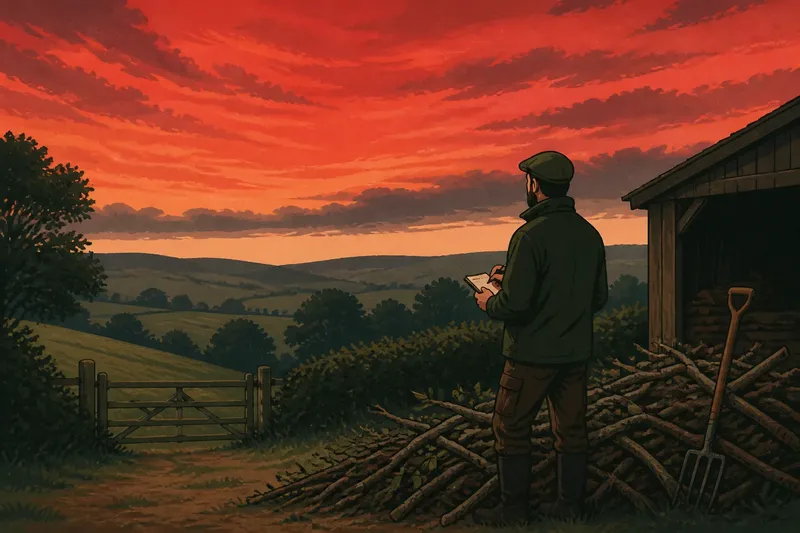
For ordinary observation, write something modest: “Hedge bends around a low bank; track approaches from the lane; purpose uncertain.” The note keeps visible details separate from interpretation. The best reading of why field boundaries bend and break may combine terrain, access, and plot shape, while leaving some questions open.
Leave room in your notes for what you do not know. It helps the next person read the hedge without mistaking a plausible story for a settled one.